
Personal Story
Mackenzie’s Year With PCS
Mackenzie recounts her year-long struggle with a concussion, detailing its profound impact on her life, the invisible weight of PCS, and her eventual path toward healing and hope.
Back to Personal Stories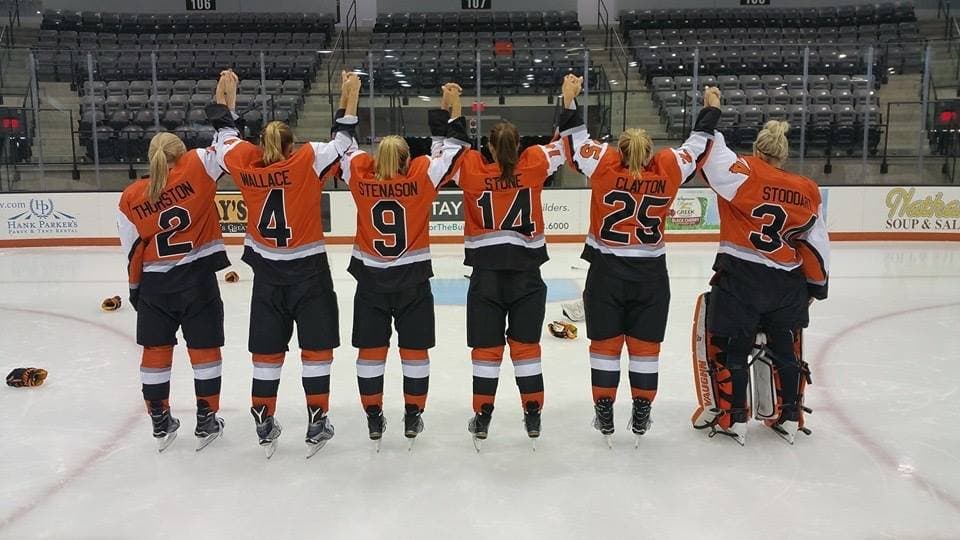
It's an invisible injury, something that's really not there, just a trick of the mind. That's what you might have heard. But lately, more recently, you might have been told that it's real. All those invisible injuries, the fake ones, they've been proving to really be there. So what is it like to live with an invisible injury? I'm sure some of you know the feeling. Hiding what is going on under the surface because it is impossible to explain, because it is impossible for other people to understand. These invisible injuries are far from fake, but they are far from being understood. I have had an entire year of experience with an invisible injury — I can't say it was the most fun thing I have ever dealt with. I had a concussion for a year last year.
I didn't realize how much I didn't like looking back on my concussion until I started writing this, but I want this to help people. I want people to understand what it's like to have a concussion, not just what it is. Maybe this will help someone understand what a teammate, a friend, or family member is going through. Maybe this will help someone that has a concussion know that they are not alone and that one day, they will beat this. Maybe this will raise more awareness about concussions. Either way, I hope that despite what I had to go through, this helps someone, some way, somehow.
The Beginning
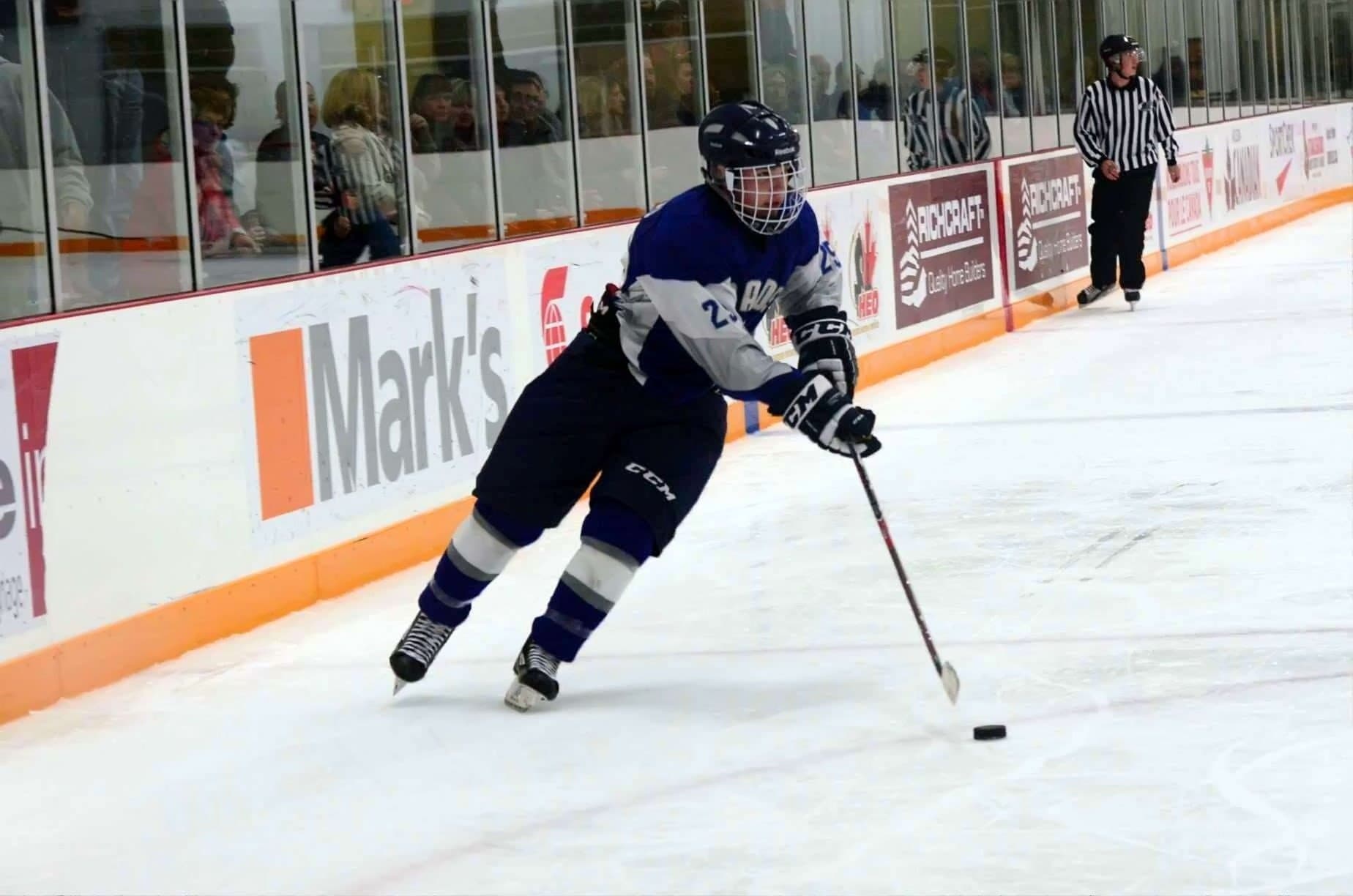
It all started October 2, 2015. It was the first game of the year. I was on the half wall on the power play and I faked a pass back to the point before cutting back sharply. That's when my head got body checked and I dropped. After the game, people would tell me that it looked bad, really bad — that I dropped like a sack of potatoes. My trainer would tell me later that when she crouched down next to me on the ice, I said "I just got rocked." But all I remember was that my sock was pushed halfway down my shin pad and my leg was cold from the ice. I remember saying that I was fine to play the last 5 minutes, that I just felt a little out of it. I remember being told to undress. I remember doing memory and balance tests. And then, 30 minutes later, I remember my first headache — the headache that would last me a year, little to my knowledge at the time. It hit me all at once: shooting pains through my head, aching across my forehead, and all the while my head felt like someone had tried to inflate it with air.
I have a high pain tolerance for headaches because I have always had them growing up. But since I was so used to headaches I brushed it off at first. I really thought it would be gone in a week. I stayed out of most of my classes and away from hockey the first week. I stayed in a dark room. And then it was another week and another. It felt like someone had physically removed me from my own life — like I was a petal that someone plucked and left drifting in the wind. I went from a full day of classes, practice, seeing my teammates, making meals, working or volunteering, and doing homework all in one day, to maybe going to a class or two. I remember trying to write a one-page paper review that would normally take me less than an hour — it took me an entire day. I remember holding back my nausea when I would drive the 5-minute distance to school. I remember feeling like the projector screens were going to burn holes in the back of my eyes. And I remember dreading having to read labels and look through items at the grocery store because I would feel so dizzy. All the while I remember the sharp pains shooting across my forehead and the ever-increasing pressure pushing against my skull.
Three Months In
Three months later I was getting impatient. I was going to vision therapy, I still couldn't play hockey, I still couldn't do anything but go on the bike, and I was still getting headaches. I started to feel frustrated that I couldn't play hockey, go to parties, even go on road trips, or participate in the life that I once took for granted. I started to feel lonely, but I still remained hopeful. Because it was only three months. People usually get better around three months — but I didn't.
So I stayed at home over intercession to see a specialist. When you're an athlete, you think the hardest thing in training is pushing yourself beyond your breaking point. It wasn't until I got my concussion that I realized the hardest thing was not to push yourself. The hardest thing was to bike for 50 minutes without your heart rising above 80 beats per minute — yes, that's a walking pace. The hardest thing was to think about all the training you put in for the season that you won't get to play. Never knowing if you would feel normal again, let alone play.
It was around this point that I was getting scared I wouldn't get better. The worst part is: no one can tell you that you will. Because no one actually knows. They can't give you a time frame like any other injury. There's just "if you keep doing the right things for your brain, one day it will be better." As a doctor, it's easy to say, but when it's your life? It's not easy to hear. It feels endless. It makes you feel anxious, helpless, and hopeless, but you can't do anything about it — so you just have to keep trying.
Back to School
At the start of February, I came back to school. The headaches came back full force right away. Classes were too much for my head. My doctors all told me to lower my class load, but I was stubborn — I had my own agenda of graduating on time. I probably would have gotten better sooner if I had listened. Instead, my life revolved around surviving my days. I could only do so many things in a day without my head feeling like it would actually break. So I had to pick and choose: rehab and school. I would go to class, take hours on homework assignments because I had to take breaks every ten minutes, take naps, do rehab, go to bed early — and repeat. I was a zombie. I was starting to lose all sense of reality.
I remember one weekend, my parents drove me to my team's playoff game in Penn State because I couldn't be on the bus, or in restaurants, or have a scheduled day because my head would hurt so badly. I remember watching the game with the loud music in the rink. I remember throwing up because it was hard for my eyes to follow the game, and the game horn was so loud. I remember moments like these scaring me — not just because that's so beyond normal, but because I was scared they would set me back even more.
Six Months Deep
When playoffs finished I was around 6 months deep into my concussion and it was getting scary. Dark rooms were really starting to wear me out. I wanted to be able to have fun and go out with my teammates, but my head hurt so badly it wasn't even worth it. It was around this time that I started to feel like I was losing it — like actually going crazy — because at this point I had forgotten what it felt like to live a normal life. I remember telling myself I could only cry for ten minutes a day. I would set a timer. I was scared I wouldn't stop if I didn't. Some nights when I couldn't sleep because it felt like someone was hitting my head with a hammer, I would just drive. I would drive an hour away at 1 am, and then when I felt a little better I would drive back.
It was never that people weren't there for me or tried to understand. It was that no one could really understand, even if they tried. Concussions don't just sideline you from your sport — they sideline you from your life. They take your ability to live. I mean really, what can you do if you don't have a brain? I couldn't really work, I couldn't really bury my head in schoolwork, I couldn't be around groups of people, I couldn't be in loud or busy settings — heck I couldn't even watch Netflix. You are just left alone, day in day out, sitting in a dark room with your thoughts and killer headaches. You start to realize there is no point in crying for help. That there really isn't a point in crying because no one can really understand and no one can make you better. You start to accept the loneliness.

Finding Light
When school ended, things started looking up. I went home for the summer. I went to a vestibular therapist and they helped. I went to a concussion optometrist and they helped too. Turns out my whole perception was off — I saw the whole world a little too much to the left. I couldn't even walk straight. I had to wear prism lenses. I wish someone could have told me that 9 months earlier. Over the course of summer without school, I started to feel better. I started ramping up to doing my team's workouts and I had my eyes set on getting cleared in the fall.
Funny thing is, I did get cleared. I remember thinking that when I got cleared, this nightmare would be over — I would be like my old self again. I don't know why I was so naive. Being back playing hockey again was amazing. Waking up without a headache was amazing. Reading a chapter of a book without a pounding headache was amazing. All of these little things we take for granted every day — that's what I loved the most about feeling better. Although all these things were amazing, I felt like I had stepped out of a time machine. Like a year of my life was fast-forwarded. I was back with my team again but I missed a whole year of inside jokes. I missed a whole year of my life. I was in the same house, played the same sport, went to the same school — but everything was different. I was different.
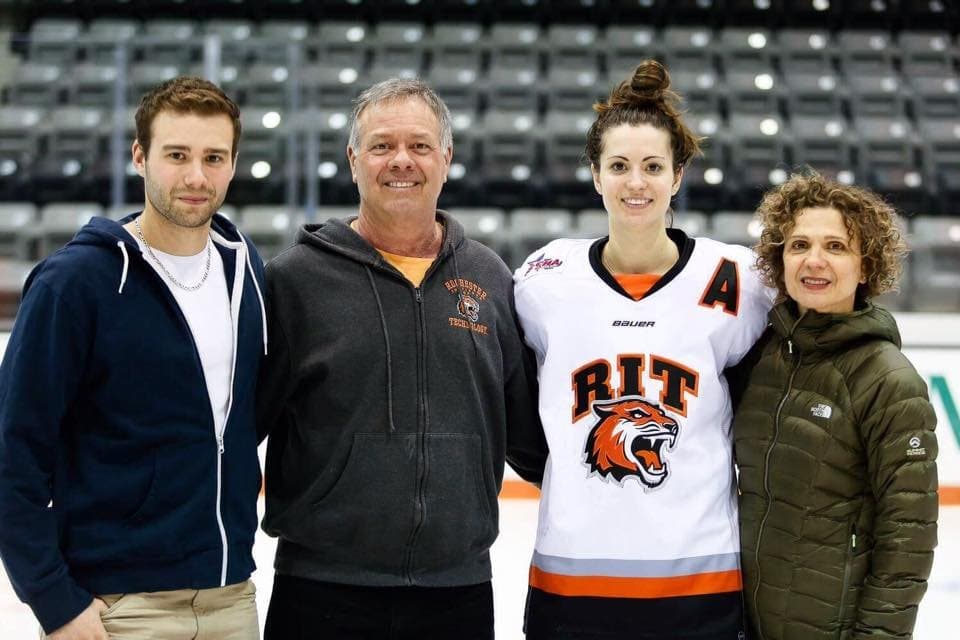
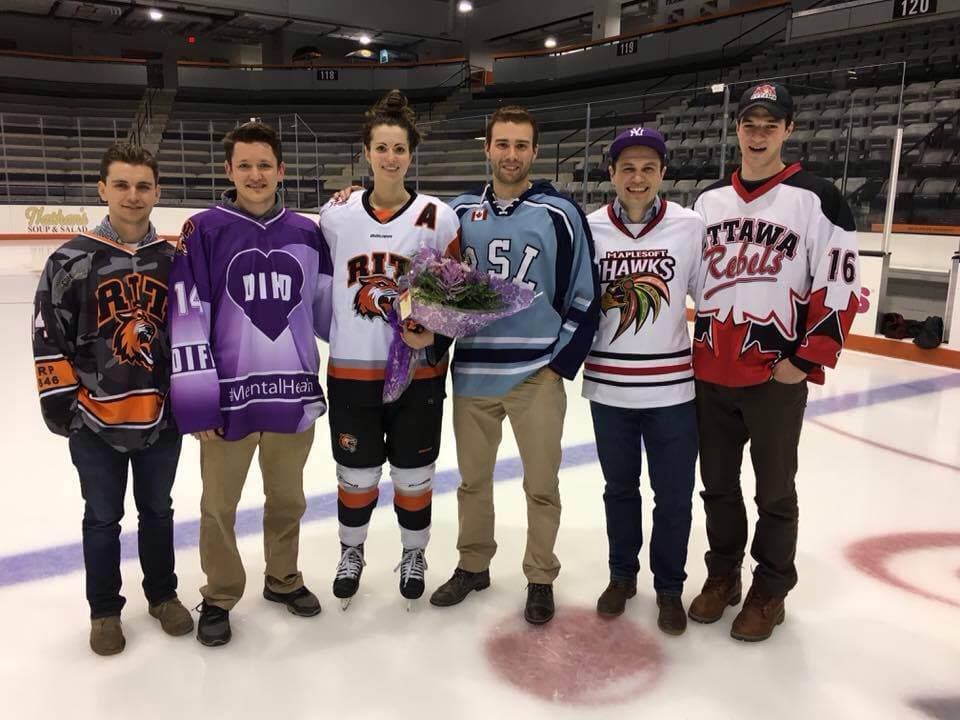
I wasn't as carefree and I was structured. I was scared that if I started to do everything again I would get headaches. I was right — they came back a little, but they were tolerable. I could deal with tolerable. I couldn't deal with another year in a dark room. Looking back at my years at RIT, it's hard to say that I was really here for four. To me, my third year doesn't even count. I think of my third year as a dark room. But just like any scar, they heal. Just like my head did. But scars — they stick with you. I would get panic attacks if my teammates went hard into the boards. The last thing I would ever want for anyone was to go through what I went through.
I believe there's reasons for everything in life. Sometimes, it's harder to find meanings behind some reasons, but I do believe that if we want to look for them, we can find them. Maybe we don't have all the answers, but I think we need to find a way to make peace with them ourselves.
SUPPORT OUR MISSION
Help Us End Brain Injury.Donate Today.
Your contribution directly fuels life-saving research and provides essential support to kids, Veterans, caregivers, athletes and families across Canada facing the challenges of brain injuries.